

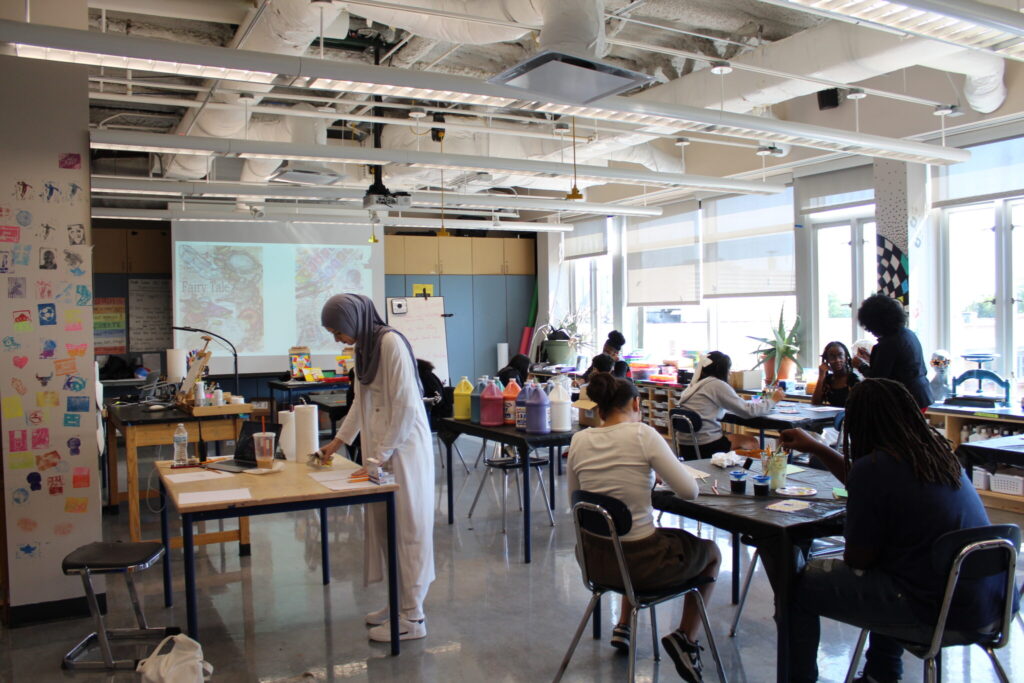
Students Develop their Identities at High Jump
We’re delighted to welcome guest writer Vivi Corre. Vivi’s study of psychology and education, passion for educational equity, and love for working with youth inform her writing.
Vivi learned about High Jump as a volunteer tutor while attending the University of Chicago Laboratory High School during her 2017-18 academic year. She recently graduated from Mount Holyoke College and will begin a master’s in social work at the University of Chicago in fall 2024. Vivi is a volunteer with High Jump, providing Communications and Marketing support, and will continue learning more about the program through additional volunteer opportunities moving forward.
Educational research consistently shows that middle school years are among the most crucial for identity development. These are the years when students begin to form a sense of self, a sense of their unique place in the world, and an idea of their short- and long-term goals. A strong sense of identity during early adolescence can improve resilience, lead to a positive outlook on life, and enable students to handle new challenges and the increased academic pressures of high school. High Jump aids students in their identity development through explicit Social Emotional Learning (SEL) instruction and arts electives that give scholars various opportunities to grow as students and as individuals.
Read on to learn how three High Jump classes help scholars develop their unique identities, values and goals.
Humanities – Skills to Prepare for High School
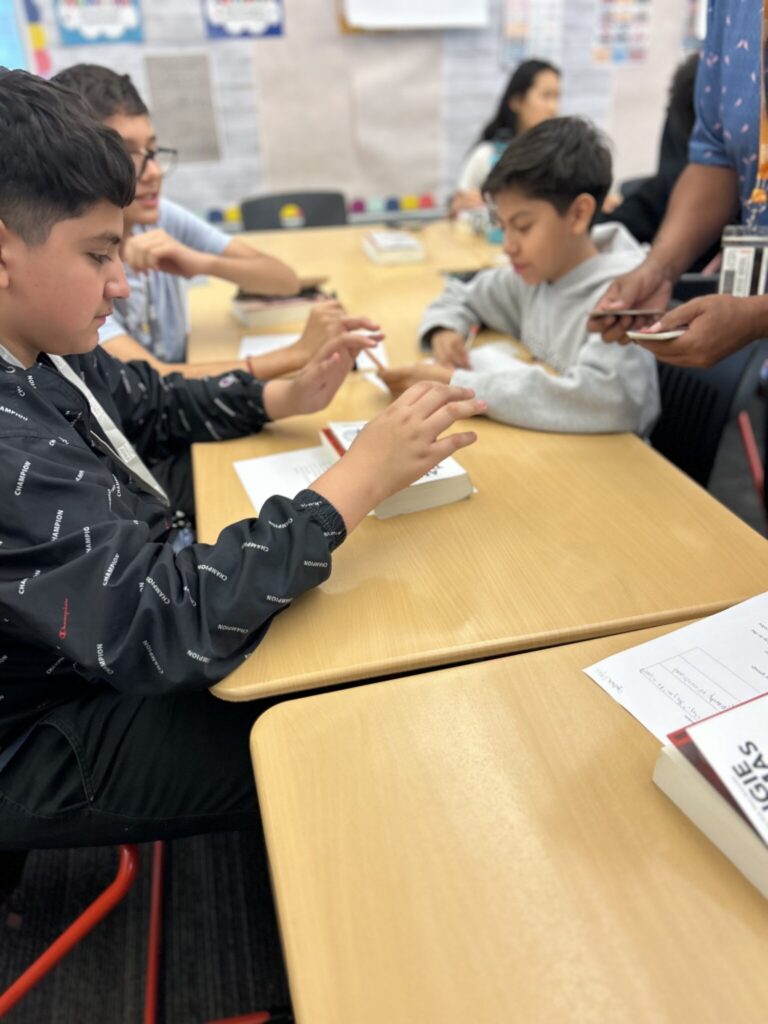
As one of the core academic classes for High Jump Scholars, the two-year Humanities sequence aids students in developing a variety of academic skills that will help them prepare for the increased academic rigor of high school and college humanities courses. Students learn critical reading, writing and analytical skills and practice class discussion. In addition, the Humanities curriculum provides a space for students to explore their unique identities in a supportive learning environment. Through culturally relevant literature, such as American Born Chinese by Gene Luen Yang and The Hate U Give by Angie Thomas, scholars explore themes such as racism, friendship, identity and belonging, and learn to relate these themes to their own lives. Students also learn to write personal narratives, which, in addition to being highly beneficial for narrative identity development, will help prepare students as they begin writing personal statements for admissions to college preparatory schools across the country.
Learners and Leaders – Opportunities to Explore Sense of Self
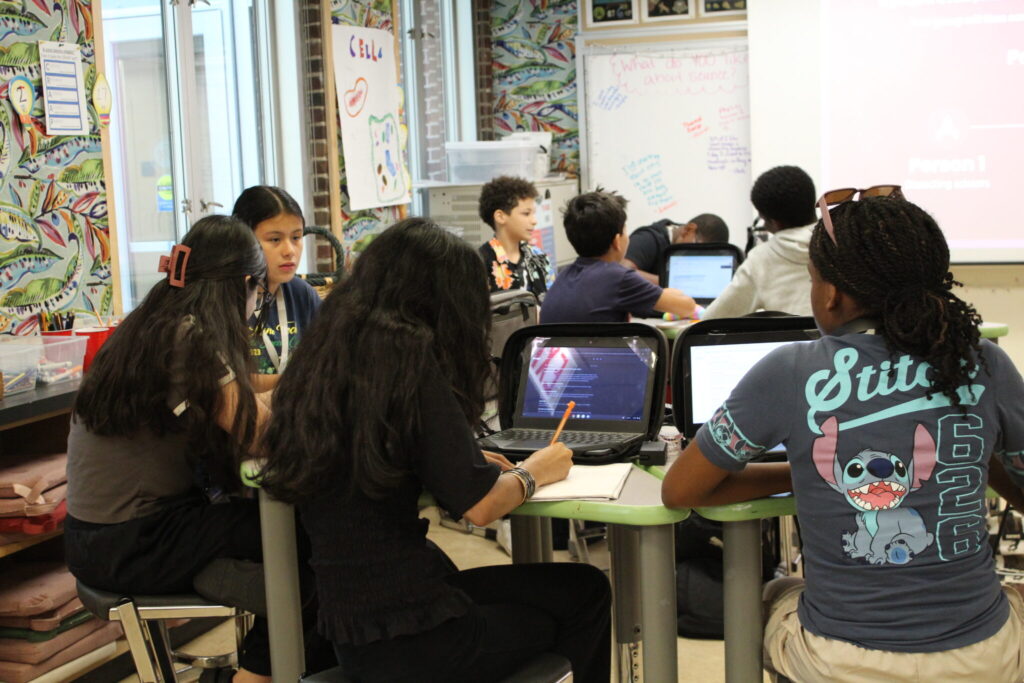
Through High Jump’s learners and leaders course, students have the opportunity to explore different aspects of social-emotional learning in a supportive environment that will help them deal with the increased social and academic pressures that arise during the middle school years. Students learn various skills for identifying emotions in themselves and others, time management techniques, how to resolve difficult social situations, and other vital skills that will help them balance their personal and school lives. On any day in class, you may see students participating in a guided meditation, learning tips for time management, or reflecting on how their learning styles and personalities impact their high school, college, and career choices. Through this course, scholars can strengthen their sense of self, become more confident in their abilities to handle complex situations, and to develop a strong sense of identity and values, which will benefit them in high school, college, and beyond.
Poetry and Spoken Word – Electives for Creative Expression
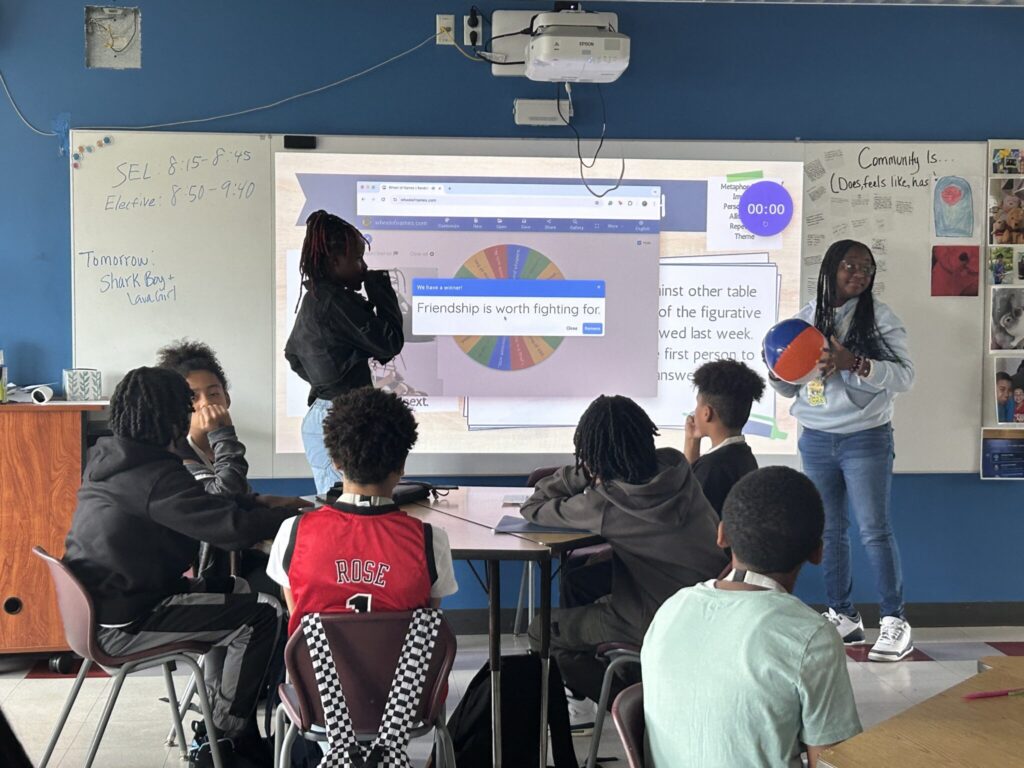
In addition to the core academic courses at High Jump, scholars have the opportunity to pursue a variety of electives, many of which give them outlets for creative expression, which psychological research has shown to be highly beneficial for adolescents. Through creative electives, High Jump gives scholars the opportunity to express themselves creatively and to reflect on their identities, which will benefit them as they navigate the increased social and emotional challenges that arise during and after high school. One such course, Poetry and Spoken Word, introduces students to core creative writing concepts, including literary devices and figurative language, while giving students an outlet to explore their core identities through the arts. Students read works from young poets, write poetry reflecting on their identities, make pieces of art that express their core identities, and eventually, compile a class literary journal where they can proudly showcase their works of self-expression to their classmates and families.
Although it may look different from class to class, High Jump provides various opportunities for scholars to reflect on how their unique identities impact their lives and strengthen their sense of self. Given the importance of development during the middle school years, the work that High Jump does is imperative to ensure that middle schoolers have the ability to thrive in high school, college, and beyond.
Over the past three decades, High Jump has provided over 3,250 academically ambitious middle schoolers of limited economic means with the right resources at the right time, empowering them to thrive. Every year in Chicago, it is estimated that thousands of rising 7th graders are eligible for our program; yet we currently only have capacity to serve 250 new students each year. The need is urgent, and we must aim to reach every interested and eligible student in Chicago. We can make that possible with your support to help Chicago’s middle schoolers to thrive.
High Jump is just the beginning of a successful educational journey for many students. More than ever, we must continue to build equitable learning opportunities for Chicago’s middle school youth.